Byretorial - when the music stops!

  • Thread starter Thread starter The Byre
  • Start date Start date
Why should owning your own home still be something for young people to aim at? Would it not be better to reform the housing stystem so that evryone has an affordable (whether rented or purchased) decent home. There will always be a number of people who cannot purchase. Concentrating reform on making it easier to buy leaves those people behind.

EDIT: To my mind the problem is, and has been for a very long time, the attitude that a house is an asset and will appreciate in value. So everyone buying a house is, in effect, a speculator. Currently house prices are ridiculous, partly because of a number of government initiatives that have increased the desirability of owning a home, thereby pushing up the cost. Starting, ironically, wth the removal of tax relief on mortgage interest.

Government are keen on keeping house prices up. Lots of voters would be disappointed, perhaps even have hundreds of thousands or millions with negative equity if the price fell enough.
Then trapped in the house - cannot sell as you'd still owe tens of thousands.

Make it easier for those wanting to buy if house prices dropped a lot. However the lenders would also have to make changes, perhaps requiring 50% plus deposit!
 
Upvote 0
A quick google search suggests that rental prices are over 30% cheaper in Spain and over 20% cheaper in France.
Maybe we need to look at profiteering in the UK rental market?
Or maybe some kind of system where we would be allowed to freely move to other countries to work and live.
Mine was only a suggestion on how to rebalance wealth so the wouldn’t be such a disparity after the next financial setback.

As I said, I was only responding to the OPs doom and gloom scenario, maybe if the next crash is as bad as he seems to think it will be house prices will be the least of our worries.
 
Upvote 0
A quick google search suggests that rental prices are over 30% cheaper in Spain and over 20% cheaper in France.

Not to detract from your main point, which I agree with, but the problem with figures such as this is that they are highly misleading. I have lived in Spain and rents/house prices can vary quite a lot from one area to the other. In some places they are comparable to the UK. In other places you can buy a 3 bedroomed apartment for 30,000 euro - you would not want to live in it though. Walk 2 miles down the road and the same will cost you 3 or 4 times as much.
 
Upvote 0
Rents are high because transport links are so poor that everyone gathers in certain areas to be closer to where they work. Unless you drive, it's impractical to live in the suburbs if you work in the city centre. The bus services in this country are awful, with rude bus drivers and late and infrequent services. Only a few cities have mass transit systems, and those that do exist are expensive. To get from one end of the London Underground to the other costs what, £20? In Tokyo, I can get from one end to the other for £3.

Local train services aren't much better. At off-peak times, for example, there is one train every hour departing from Newark to Lincoln.

If you want rents to fall, improve transport links. Build mass transit systems.

But no, we have NIMBYs and climate change activists opposing any kind of construction project, and governments and councils worried about cost, instead of looking at the economic benefit. Leeds Supertram was approved 20 years ago, then cancelled 8 years later with no alternative in sight.
 
Upvote 0
A quick google search suggests that rental prices are over 30% cheaper in Spain and over 20% cheaper in France.
Maybe we need to look at profiteering in the UK rental market?
Or maybe some kind of system where we would be allowed to freely move to other countries to work and live.
Mine was only a suggestion on how to rebalance wealth so the wouldn’t be such a disparity after the next financial setback.

As I said, I was only responding to the OPs doom and gloom scenario, maybe if the next crash is as bad as he seems to think it will be house prices will be the least of our worries.

The only thing IMO which will bring residential rental values down, as a percentage of a renters income, is market forces. I cant blame a residential landlord from maximising their returns. It doesnt help when their is insufficient housing stock. If the government undertook an aggressive house building policy and built sufficient quality housing which reflected its build cost rather than its market value and offered a long term housing solution for majority of the rental market then the private landlords have to up their game and also price to where the market is.

Building more "council housing" will only alleviate a small percentage of the problem. Affordable community housing needs a drastic rethink.
 
Upvote 0
As I said, I was only responding to the OPs doom and gloom scenario, maybe if the next crash is as bad as he seems to think it will be house prices will be the least of our worries.
The gloom-and-doom only happens if interest rates rise sufficiently to stop the mounting inflationary pressures. The truth is that interest rates probably cannot ever rise because that would crash economies across the Western world. And that means that central banks and governments have to find other ways of stemming inflation.

Just as they can print dollars, pounds and Euros, they can suck them back out again by buying bonds and raising the reserve requirements for the investment and retail banks. Controlling inflation this way is one of the cornerstones of Modern Monetary Theory (MMT) also known as More Money Today!

In times of crisis, you give everybody and their mothers-in-law and the cat all them 'stimmy' cheques and furlough payments and then when things are back to normal, you suck the surplus money back out of the system to prevent hyperinflation.

This sounds lovely in theory - but doing this is to play with fire and here's why -

1. It leads to asset price inflation. All that loose 'stimmy' money gets pumped into crazy things like retail share buying, cryptocurrencies and house-price inflation. Bubbles blow up and bubbles burst.

2. People lose faith in valuations and money itself.

3. The asset-holders are the rich, therefore (you've guessed it!) the rich get richer!

4. All sorts of people miss out on all that free money. Casual labour, waiters and cooks, anyone that is part of the gig economy like Uber drivers. Just as the rich get richer, the poor get poorer.

5. Productivity falls through the floor. Nominal GDP may rise slightly or remain stable, but the real economy tanks. Why bother working when we can earn a living by playing with stocks, bonds, futures and cryptos? And if you are on furlough, 80% for doing F-all whilst you improve the house, work on the side, lie in bed scratching yourself - whatever - sounds like a better deal than getting up every morning and going to work!

6. We still have to live, so we suck-in imports and pay for them with QE money we created. Now, all that money is out of the control of the central bank. Soon, it comes wandering back, looking for assets to buy --> more asset price inflation!

7. We destructure our real economy by divesting ourselves of the skills, infrastructure and factories required to manufacture things. The rapid demise of manufacturing in the UK and the US is truly eye-watering! Of the dozens and dozens of film camera manufacturers in those two countries, just two US brands are left - Red and Panavision. The same or similar happened across all products, from furniture to test equipment, from household white goods to cars. What little is left are mostly screwdriver-factories owned outside the UK assembling foreign-built parts.

8. We expand the role of the central banks in the economy beyond anything that can be described as either prudent or wise. Over 60% of all US mortgages are now owned by the Fed who has also been buying up company bonds. The BoE has been up to similar games via its Asset Purchase Scheme and its Asset Purchase Facility. After the 2010 crisis, the APF fund shot up from c.a. £5bn to £180bn. In November it was at £600bn according to the FT.

9. We expand the role of government in the economy beyond anything that can be described as either prudent or wise. Governments are the opposite of production - they are economically parasitic. Governments do not produce anything. Their role is to provide the infrastructure upon which we rely in order to be productive. The means the establishment of law and order and a civil code and the enabling the provision of electricity, water, roads, healthcare, education, etc., whether that be done privately or by arms of government directly. MMT however leads inexorably to governments taking over ownership of banks and other private enterprises deemed 'Too big to fail'. When government spending accounts for more than 35% of GDP, the economy starts to shrink and tax revenues fall dramatically. When Wilson tried to increase taxes which were already at 38% of GDP, tax revenues fell to 32% of GDP.

10. MMT hands the reins of power to outside, non-democratic forces. By printing money to pay for all those lovely new toys from China, cars from Germany and Japan and food from Belgium and Spain, billions of pounds go into pockets outside the UK and outside any control by the BoE. Those billions can be used in all sorts of interesting ways - not all to the benefit of the UK or its population. That money may be used to drain talent away or buy strategic assets or IP or buy influence and friends. US dollars are today being used by China to finance the One Road, One Belt initiative - the largest infrastructure project the world has ever seen.

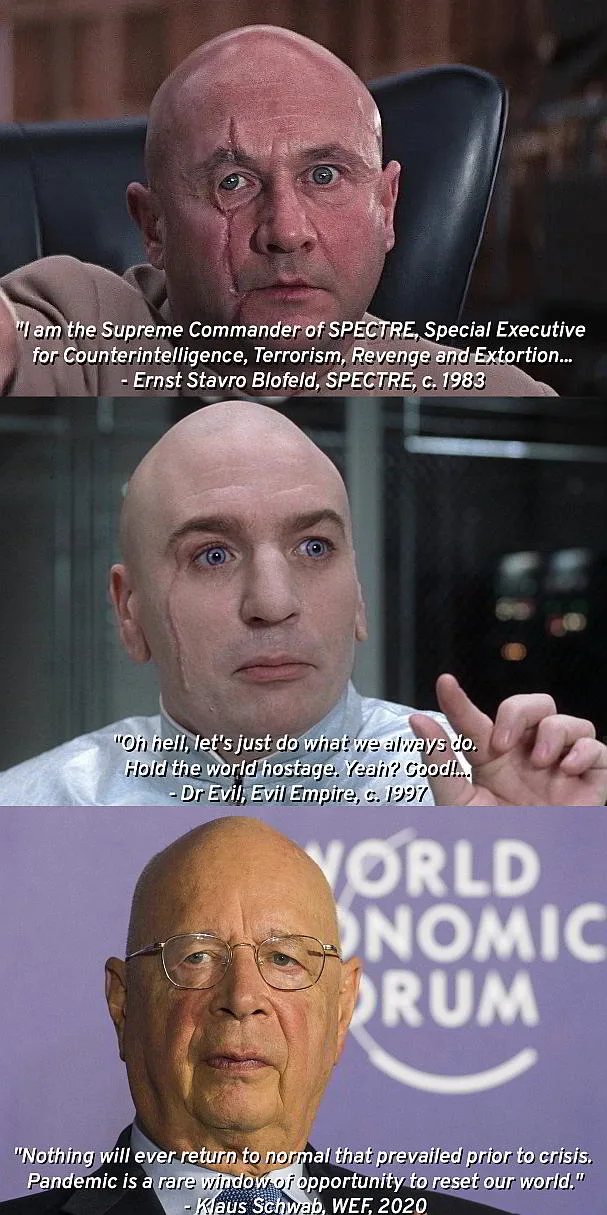
So there you have it! The top ten reasons (there are others!) why MMT could spell the end of our economy as we know it today - but fear not! It is all part of 'The Great Reset!' as advocated by 'The World Economic Forum'. That's the Davos crowd - a self-selected group of billionaires who only have our best interests at heart!

And at its head one Professor Klaus Schwaab.

aP72jLB_700bwp.webp
 
  • Like
Reactions: simon field
Upvote 0
A quick google search suggests that rental prices are over 30% cheaper in Spain and over 20% cheaper in France.
Maybe we need to look at profiteering in the UK rental market?
Or maybe some kind of system where we would be allowed to freely move to other countries to work and live.
Mine was only a suggestion on how to rebalance wealth so the wouldn’t be such a disparity after the next financial setback.

As I said, I was only responding to the OPs doom and gloom scenario, maybe if the next crash is as bad as he seems to think it will be house prices will be the least of our worries.

Yes - possibly our system is too expensive. Or maybe its our house prices that are too expensive.

Getting 3 or 4 percent return on your capital when investing in houses may be good enough with house prices going up. If they aren't going up will 3 or 4% return be enough?
And for those taking a mortgage to finance buy to let purchase, they ideally want more than enough to cover the mortgage plus to pay for tenants not paying, redecoration, repair etc.

If tenants stopped paying over a year ago and they are still in the property - as cannot be evicted easily yet - then potentially a bill of thousands for the year while zero income for the property.
Extreme problems happen - and may well be factored into the rent charged on all properties by that owner.
 
Upvote 0
The only thing IMO which will bring residential rental values down, as a percentage of a renters income, is market forces. I cant blame a residential landlord from maximising their returns. It doesnt help when their is insufficient housing stock. If the government undertook an aggressive house building policy and built sufficient quality housing which reflected its build cost rather than its market value and offered a long term housing solution for majority of the rental market then the private landlords have to up their game and also price to where the market is.

Building more "council housing" will only alleviate a small percentage of the problem. Affordable community housing needs a drastic rethink.

Governments have undertaken aggressive house building policies. Multiple governments have.
You see the result?

Government isn't building. Government don't decide where to build except in rare circumstances.
Government declare 500,000 houses will be built a year? Then its down to councils, builders, suppliers etc. Who cannot or will not do so.
A housing estate near me was built about 6 years ago. The builder started the process in 1990s by buying the land. The first houses were started building in 2012.
Block after block after legal action after protests after sabotage etc. Though the sabotage may have been kids out for some fun.
 
Upvote 0
Don't worry kids - as @Irontoe said, house prices will soon be the least of your worries! It may take days, it may take another two years (tops!) but sooner or later the crash will come and it will start with Wall Street - but the UK will be the worst affected as it suffers the dual whammy of Brexit and years of QE.
 
Upvote 0
Keeps the merry go round going for a few months longer. And some very annoyed people when it stops - what with 95% mortgage and a 30% value home.
The mortgage market has been manic since lockdown 1 was lifted. Every decent broker I know had their best year last year or very close to.

95% mortgages are not needed, not at the minute.

However, the chancellor wants people to go out and spend - what better way than buying a new home? Solicitors costs, brokers costs, surveyors costs. Decorators or tradesmen, new wallpaper, new kitchen/bathroom/carpet/furniture etc etc.

I cant help but think that probably has something to do with it.
 
Upvote 0
The mortgage market has been manic since lockdown 1 was lifted. Every decent broker I know had their best year last year or very close to.

95% mortgages are not needed, not at the minute.

However, the chancellor wants people to go out and spend - what better way than buying a new home? Solicitors costs, brokers costs, surveyors costs. Decorators or tradesmen, new wallpaper, new kitchen/bathroom/carpet/furniture etc etc.

I cant help but think that probably has something to do with it.

You could well be right.

I notice for years government have complained about people living beyond their means, getting into debt, running up massive credit card bills and payday loans.
Now with lockdown, working from home, two jobs due to furlough etc - as a society we apparently have saved, cleared major debts etc. And it's panicking the government.
They need us going mad spending to basically pay vat, reduce losses by business or even get a profit that is taxable, take on more debt etc....
 
Upvote 0
And that think-tank suggesting people working from home should pay extra tax because they're saving too much money from not travelling to work and not buying expensive city-centre lunches...

Has the world gone mad?
 
Upvote 0

Latest Articles