Mileage Expenses - Work From Home

pbdesigns

Free Member
Nov 23, 2011
155
14
Our employees predominantly work from home, but we have a town centre office for them to use as needed. In their contract, this is listed as their place of work.

What's the deal with paying mileage expenses for visiting clients?

Most clients are fairly close to the town centre office. Should we only be paying the mileage from the office location to the client, even if the worker didn't go into the office for that visit?

Or pay them from their home location for the entire drive?
 

Newchodge

Moderator
  • Business Listing
    Nov 8, 2012
    22,639
    8
    7,949
    Newcastle
    Our employees predominantly work from home, but we have a town centre office for them to use as needed. In their contract, this is listed as their place of work.

    What's the deal with paying mileage expenses for visiting clients?

    Most clients are fairly close to the town centre office. Should we only be paying the mileage from the office location to the client, even if the worker didn't go into the office for that visit?

    Or pay them from their home location for the entire drive?
    Presumably this is not already covered in your contracts/polcies?

    It is 100% up to you. There is no legal requirement that you pay any mileage, however, if you choose to pay, what you pay is for you to decide (or, more properly, for you and your employees to negotiate).

    Legally any reimbursement of mileage from home to normal workplace should be taxed. Many employees deal with that by only paying for mileage above and beyond the normal daily commute to the official workplace.

    Paying only for the actual mileage from the office will result in anomalies, depending on where the employee lives. A visit to a client who is half way between home and office will result in the same payment as a visit to a client who is the other side of the ofice. But the first employee has incurred much lower mileage costs. It is more normal to deduct the mileage for home to office from any claim, so the first employee rceives nothing..
     
    Upvote 0

    pbdesigns

    Free Member
    Nov 23, 2011
    155
    14
    Paying only for the actual mileage from the office will result in anomalies, depending on where the employee lives. A visit to a client who is half way between home and office will result in the same payment as a visit to a client who is the other side of the ofice. But the first employee has incurred much lower mileage costs. It is more normal to deduct the mileage for home to office from any claim, so the first employee rceives nothing..
    We agreed it as from the office (and contract makes clear the office is the place of work).

    But now in reality, I'm working out how we square this.

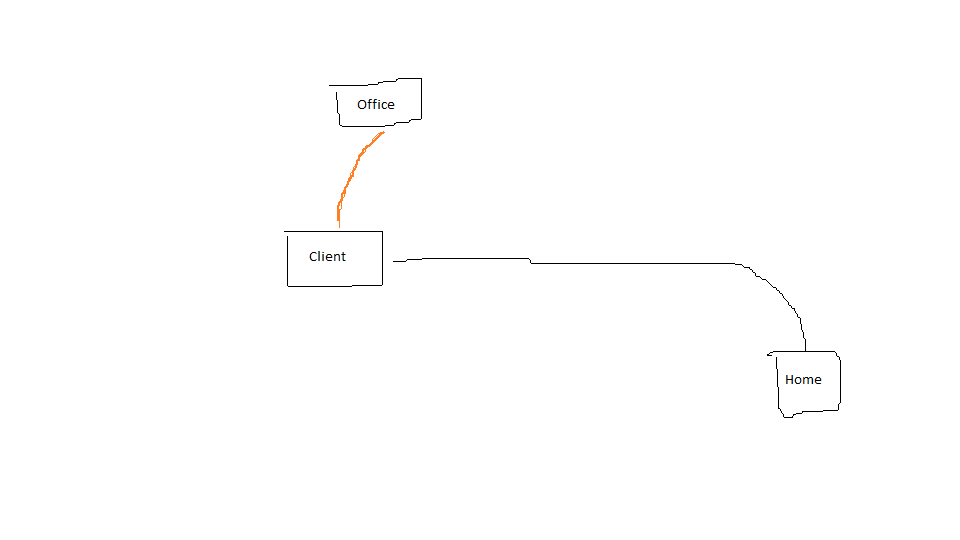
    The below is an example of where the employee lives, where the office is, and where the client meeting took place. According to our contract, we pay from the office to the client, but because the employee didn't come into the office, the claim would bear no relation to the reality of the journey actually made.

    Or is it acceptable to pay that route that was never actually taken?

    Untitled.png
     
    Upvote 0

    Newchodge

    Moderator
  • Business Listing
    Nov 8, 2012
    22,639
    8
    7,949
    Newcastle
    We agreed it as from the office (and contract makes clear the office is the place of work).

    But now in reality, I'm working out how we square this.

    The below is an example of where the employee lives, where the office is, and where the client meeting took place. According to our contract, we pay from the office to the client, but because the employee didn't come into the office, the claim would bear no relation to the reality of the journey actually made.

    Or is it acceptable to pay that route that was never actually taken?

    Untitled.png
    It is acceptable. The employee is expected to pay to ge to work. Work is the office. They haven't paid that so they are not out of pocket. Is the employee objecting?
     
    Upvote 0

    DontAsk

    Free Member
    Jan 7, 2015
    5,446
    3
    1,392
    Does the contract say that they should always call in at the office to start a journey?

    Whenever I had to travel (regardless of whether I would be in the office or WFH) I would go straight to wherever I was going and was reimbursed for the difference (if > 0) between that and going to the office.

    In your example it looks like they are very similar and the employee was not disadvantage by going to the client, rather than the office. If you insist the set out from the office then they are disadvantaged in time and miles, but would be reimbursed for office - client.

    A pragmatic approach is required.
     
    • Like
    Reactions: ctrlbrk
    Upvote 0

    Newchodge

    Moderator
  • Business Listing
    Nov 8, 2012
    22,639
    8
    7,949
    Newcastle
    Does the contract say that they should always call in at the office to start a journey?

    Whenever I had to travel (regardless of whether I would be in the office or WFH) I would go straight to wherever I was going and was reimbursed for the difference (if > 0) between that and going to the office.

    In your example it looks like they are very similar and the employee was not disadvantage by going to the client, rather than the office. If you insist the set out from the office then they are disadvantaged in time and miles, but would be reimbursed for office - client.

    A pragmatic approach is required.
    I don't think the staff are being asked to go to the office first, but they are being poaid mileage as if they did so. Which creates problems.
     
    Upvote 0
    If claims are reasonable, I do not think HMRC will get stressed either way, however, if you state mileage from office, that is what you should stick to.
     
    Upvote 0

    BusterBloodvessel

    Free Member
  • Jan 22, 2018
    893
    1
    587
    I think you've been given a reasonable and simple answer, haven't you?

    If commute to office is 5 miles, and instead they go directly to client which is 7 miles, you pay them 2 miles. They get paid the mileage for additional miles above and beyond the agreed and expected office commute.

    If commute to office is 5 miles, and instead they go directly to client which is in fact only 3 miles, they claim nothing. Small win for them because they've travelled less than the agreed and expected mileage.

    Simple as that?
     
    Upvote 0

    Lucan Unlordly

    Free Member
    Feb 24, 2009
    3,959
    994
    If commute to office is 5 miles, and instead they go directly to client which is 7 miles, you pay them 2 miles. They get paid the mileage for additional miles above and beyond the agreed and expected office commute.
    Ok for the locals, but could work out expensive if the employee lives 20+ miles away. They've also got to get home again!

    What is the typical order value when face to face with a client?
     
    Upvote 0

    BusterBloodvessel

    Free Member
  • Jan 22, 2018
    893
    1
    587
    Ok for the locals, but could work out expensive if the employee lives 20+ miles away. They've also got to get home again!

    What is the typical order value when face to face with a client?
    Expensive for who? I don’t understand, if the company pays mileage they pay mileage if they go 20 miles from the office. I’m not following how the company could be losing out?

    Unless I’m being thick….which is not unheard of!
     
    Upvote 0

    Chris Ashdown

    Free Member
  • Dec 7, 2003
    13,380
    3,001
    Norfolk
    Milage claimed should be only for actual milage and logged in a book with start and end mileage's, I think the office is a red herring if they work predominantly at home, that is their primary place of work
    You need to sort this out as a HMRC inspection could land you and staff possible fines
     
    Upvote 0

    Newchodge

    Moderator
  • Business Listing
    Nov 8, 2012
    22,639
    8
    7,949
    Newcastle
    Milage claimed should be only for actual milage and logged in a book with start and end mileage's, I think the office is a red herring if they work predominantly at home, that is their primary place of work
    You need to sort this out as a HMRC inspection could land you and staff possible fines
    The contract states that the place of work is the office. They will use that. I used to work for an organisation with an office in every region, but I and my colleagues were all expected to spend 95% of our time out of the office. They reached a formal agreement with HMRC that our homes were our places of work, so we could claim for mileage from leaving home. Absent such an agreement, the office, as per the contract is the normal place of work.
     
    Upvote 0

    MikeJ

    Free Member
    Jan 15, 2008
    6,949
    2,241
    Northumbeland
    Surely you should be paying them for any miles they wouldn't be doing if they weren't visiting the client. That's harder to define in this case, because you seem to be mistakenly defining them as working from the office when they mostly work from home. However, if you change their workplace to home, then you'd potentially have to pay them mileage if you asked them to come to the office.
     
    Upvote 0

    Chris Ashdown

    Free Member
  • Dec 7, 2003
    13,380
    3,001
    Norfolk
    The contract states that the place of work is the office. They will use that. I used to work for an organisation with an office in every region, but I and my colleagues were all expected to spend 95% of our time out of the office. They reached a formal agreement with HMRC that our homes were our places of work, so we could claim for mileage from leaving home. Absent such an agreement, the office, as per the contract is the normal place of work.
    But is it not a lie to HMRC stating the POW is the office when its really home, it just seems a rather stupid move to make over a relatively small amount of money that could come back to haunt you in say 5 years time
     
    Upvote 0

    Newchodge

    Moderator
  • Business Listing
    Nov 8, 2012
    22,639
    8
    7,949
    Newcastle
    Surely you should be paying them for any miles they wouldn't be doing if they weren't visiting the client. That's harder to define in this case, because you seem to be mistakenly defining them as working from the office when they mostly work from home. However, if you change their workplace to home, then you'd potentially have to pay them mileage if you asked them to come to the office.
    A designated 'normal workplace' is very common. The complicating factor here is that the employer is contractually bound to pay mileage as if they start and finish at the office. Which is the worst of all worlds. HMRC can be a bit unhappy about designating home as the workplace when it is an employee choice.
     
    Upvote 0

    Newchodge

    Moderator
  • Business Listing
    Nov 8, 2012
    22,639
    8
    7,949
    Newcastle
    But is it not a lie to HMRC stating the POW is the office when its really home, it just seems a rather stupid move to make over a relatively small amount of money that could come back to haunt you in say 5 years time
    What could come back to haunt them? HMRC is unhappy if employees don't pay the cost of getting to work. That would not be an issue if the home to office mileage is deducted from any claim. It is very very common.
     
    Upvote 0

    Latest Articles

    Join UK Business Forums for free business advice