
It's hard to believe Instagram is only five years old, and in that time has just passed over 400 million users of its massively popular photography app.
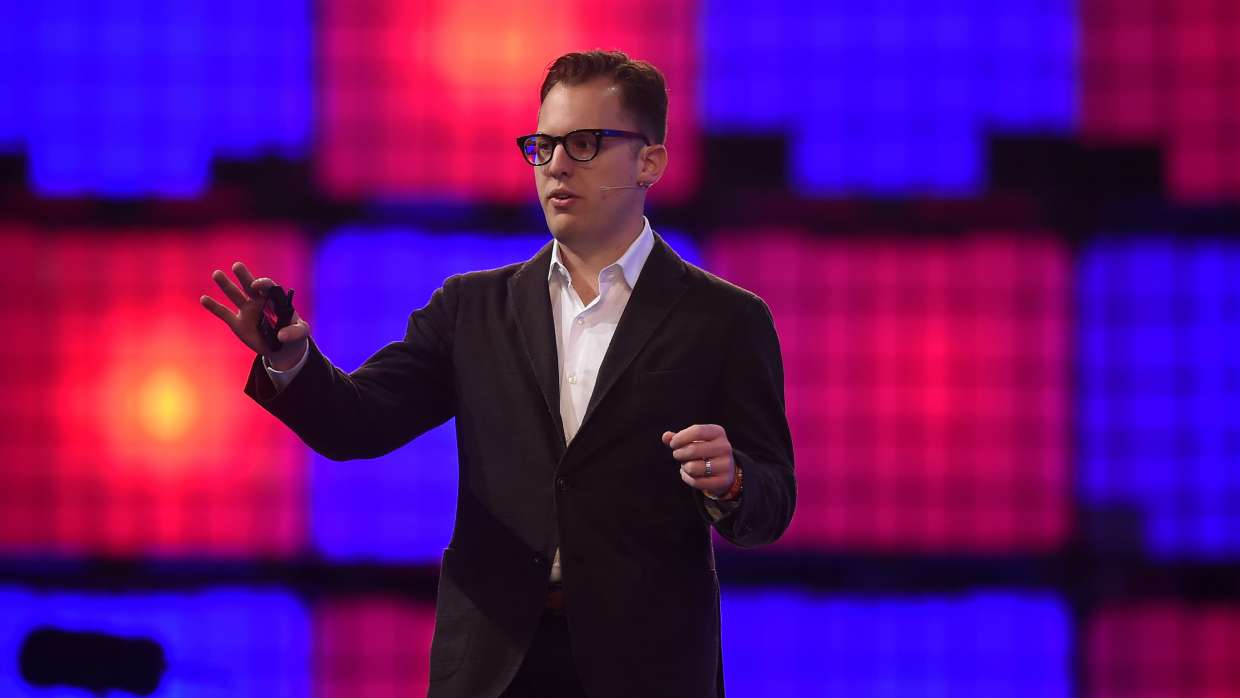
Cofounder and chief technology officer Mike Krieger spoke at Web Summit recently about how the tech startup has had to adapt and change its product at users' requests as it scaled, to meet increasing demand for features.
He spoke about the industry fight at the moment between humans versus machines, and shares how the company has used both big data and a 'real' editorial touch to humanise the experience for both new and returning users.
To put the scale of change into perspective, in the last 100 years the New York library has accumulated 1.2 million photos. But during Krieger's Web Summit talk Instagram had over the same amount uploaded to the app.
And nowadays, 75% of pictures are taken on smartphones. With the app getting 80 million photos a day, Instagram is challenged on how it makes sense of this data.
It's such a simple statement to encompass the large chunk of behind the scenes work Instagram does and the thought that goes into how it operates.
'At first we thought: 'this is going to be easy' and we'll apply some machine learning, big data hand-wavey stuff but unfortunately, that's not how it works,' Krieger adds, outlining the process the app's gone through from 2010 to today involving both machine learning and editorial.
At the app's launch when it had just 25,000 users, the suggested version one began with the app's first hire: a community manager named Josh.
'We realised how we were going to succeed wasn't just building better technology or better products, but it's about having a really active, engaged community. He spent a lot of time getting in touch with people and finding out what worked and what didn't for them and curated a lot of the great content on our blog which we started - we would have things like year in photos and highlighting things around the world,' Krieger explains.
The blog worked really well for newcomers, telling them who to follow, which is what Krieger says the biggest determinant as to whether a user's going to return
The first iteration of the product suggested existing Facebook and Twitter friends. But if you didn't want to do this, Instagram would handpick accounts for users to follow. They found however that this wasn't personalised and users were unlikely to come back if they had followed these suggested users.
'In Instagram, we like to talk about doing the simple thing first. It's our internal mantra and this is what we did for the popular page,' Krieger explains.
The formula for the popular page on Instagram was a very simple piece of code, i.e. the number of likes over the number of followers and decayed over time.
It was a popular feature but as the company grew and user based evolved, the pictures showing up on the popular page changed to selfies, make up pictures and a lot of celebrities which not everyone liked seeing.
It was time to change again.
'Now we had an editorial suggested user product that wasn't working very well and a popular page that had worked great for the first six months and as we grew stopped being that effective,' he explains.
'We took stock of that and asked how can we evolve our algorithms. In other words, how can we make explore not suck? We did the simple thing first, got it started and ran a few A/B tests.'
One of Instagram's engineers suggested the product should be based around pictures liked by people users have followed.
They found this brought a fivefold increase in engagement, but even more criticism. They listened to this again and released another version of that feature: photos liked by people whose photos you've liked, which showed a sevenfold increase and has since been improved using elements such as where you live, how long you're spending on a picture, etc.
They've done this by curating content from users' biographies - i.e. if you say you like fashion and basketball, they'll suggest you follow the NBA and Vogue.
Instagram uses a machine learning product based on Facebook's for this, but also uses editors to name, filter and categorise the topics and 'really make the product sing'.
Next on the agenda is live storytelling and curation, which was tested in the US at Halloween and prepared by a combination of machine learning gathering the pictures and editors curating the images for users by handpicking them from a narrowed-down list.
'This has been the story of us adapting and evolving from a 25,5000 community on the first day to now 80 million pictures a day, adapting to international scale and applying the best of machine learning tech but with the craft and curation that is really central to Instagram to the editorial touch we can bring and humanise the app and storytelling experience,' Krieger says.
Cofounder and chief technology officer Mike Krieger spoke at Web Summit recently about how the tech startup has had to adapt and change its product at users' requests as it scaled, to meet increasing demand for features.
He spoke about the industry fight at the moment between humans versus machines, and shares how the company has used both big data and a 'real' editorial touch to humanise the experience for both new and returning users.
To put the scale of change into perspective, in the last 100 years the New York library has accumulated 1.2 million photos. But during Krieger's Web Summit talk Instagram had over the same amount uploaded to the app.
And nowadays, 75% of pictures are taken on smartphones. With the app getting 80 million photos a day, Instagram is challenged on how it makes sense of this data.
Have a strong, simple company statement
'When we talk about Instagram we like to talk about capturing and sharing the world's moments. That's our company statement, that's what we talk about internally and it's about people who are connecting people on Instagram with the world as it's happening,' Krieger says.It's such a simple statement to encompass the large chunk of behind the scenes work Instagram does and the thought that goes into how it operates.
'At first we thought: 'this is going to be easy' and we'll apply some machine learning, big data hand-wavey stuff but unfortunately, that's not how it works,' Krieger adds, outlining the process the app's gone through from 2010 to today involving both machine learning and editorial.
At the app's launch when it had just 25,000 users, the suggested version one began with the app's first hire: a community manager named Josh.
'We realised how we were going to succeed wasn't just building better technology or better products, but it's about having a really active, engaged community. He spent a lot of time getting in touch with people and finding out what worked and what didn't for them and curated a lot of the great content on our blog which we started - we would have things like year in photos and highlighting things around the world,' Krieger explains.
The blog worked really well for newcomers, telling them who to follow, which is what Krieger says the biggest determinant as to whether a user's going to return
The first iteration of the product suggested existing Facebook and Twitter friends. But if you didn't want to do this, Instagram would handpick accounts for users to follow. They found however that this wasn't personalised and users were unlikely to come back if they had followed these suggested users.
Revisit what's not working
Three years later in 2013, as its user base was growing, Instagram wasn't happy with its hand curated 'discovery' product. At this time it also included a 'popular' page which was also supposed to provide a useful experience for newcomers.'In Instagram, we like to talk about doing the simple thing first. It's our internal mantra and this is what we did for the popular page,' Krieger explains.
The formula for the popular page on Instagram was a very simple piece of code, i.e. the number of likes over the number of followers and decayed over time.
It was a popular feature but as the company grew and user based evolved, the pictures showing up on the popular page changed to selfies, make up pictures and a lot of celebrities which not everyone liked seeing.
It was time to change again.
Pay attention to negative feedback
One thing that's clear from Krieger's talk is that Instagram, despite its size, does listen acutely to user feedback and especially on Twitter. The app received a lot of negative comments about features such as the popular page which they used to fuel user research into developing this further.'Now we had an editorial suggested user product that wasn't working very well and a popular page that had worked great for the first six months and as we grew stopped being that effective,' he explains.
'We took stock of that and asked how can we evolve our algorithms. In other words, how can we make explore not suck? We did the simple thing first, got it started and ran a few A/B tests.'
One of Instagram's engineers suggested the product should be based around pictures liked by people users have followed.
They found this brought a fivefold increase in engagement, but even more criticism. They listened to this again and released another version of that feature: photos liked by people whose photos you've liked, which showed a sevenfold increase and has since been improved using elements such as where you live, how long you're spending on a picture, etc.
Humanise your offering
The app is continuing to add new features and functions, such as offering new users the chance to choose categories on sign up to personalise the offering for them as well as returning and existing users.They've done this by curating content from users' biographies - i.e. if you say you like fashion and basketball, they'll suggest you follow the NBA and Vogue.
Instagram uses a machine learning product based on Facebook's for this, but also uses editors to name, filter and categorise the topics and 'really make the product sing'.
Next on the agenda is live storytelling and curation, which was tested in the US at Halloween and prepared by a combination of machine learning gathering the pictures and editors curating the images for users by handpicking them from a narrowed-down list.
'This has been the story of us adapting and evolving from a 25,5000 community on the first day to now 80 million pictures a day, adapting to international scale and applying the best of machine learning tech but with the craft and curation that is really central to Instagram to the editorial touch we can bring and humanise the app and storytelling experience,' Krieger says.

