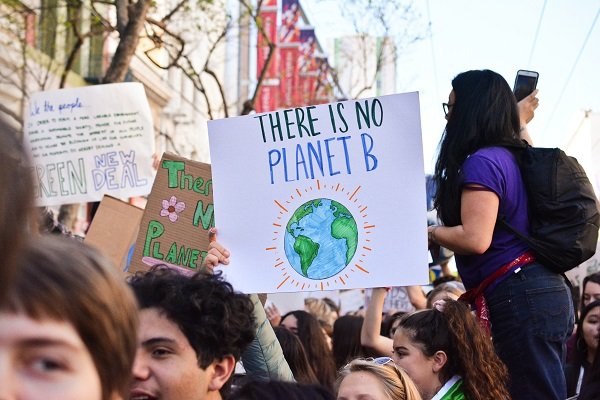
The COP26 climate summit may be over, but for many, the real work of reducing carbon emissions is just beginning. What support do small businesses need to play their part?
The government recently announced that over half of FTSE100 companies have committed to eliminating their contribution to climate change by 2050. It also praised the progress of Britain’s largest businesses so far, saying that they’re “leading the way in the global transition to net zero emissions”.
And yet, it appears to be a very different story for small businesses. The government’s recent net zero strategy contained only four specific mentions of small business, and emerging data shows a clear trend that SMEs are struggling to step up.
A survey by the British Business Bank revealed that only 3% of smaller businesses have measured their carbon footprint in the last five years and set an emissions reduction target.
Research by the Federation of Small Businesses (FSB) was more optimistic – but only slightly. It surveyed 1,200 small firms and found that many are concerned about climate change but only one in three have a plan in place to tackle it.
“Small businesses are keen to play their part, but often don’t have the resources, deep pockets and dedicated specialists enjoyed by their larger counterparts,” said FSB National Chair Mike Cherry. “So they can find identifying and taking the necessary steps a challenge.”
The discussion showed that many members are concerned about the environmental impact of their operations, but either feel powerless to reduce the impact or they don’t feel that the changes they’ve made are big enough.
@14Steve14 runs a small online retail business. “We are trying to buy recycled or partially recycled packaging products, but price is a concern,” he said.
“We have also started ordering in larger volumes to save packaging and delivery emissions but I doubt it makes that much difference as the delivery vans are in the area every day anyway. We are trying in any small way that we can but there is not much left to change.”
Their research found that cost was a big factor for those who have not yet taken action to reduce energy usage:
“My business is doomed. We are GRP moulders [glass reinforced plastic], and let me tell you – our environmental-friendliness is non-existent!” said @simon field.
“Raw material prices have roughly doubled and there’s no end in sight. China, Taiwan, India, Korea, Indonesia etc are busy supplementing their own markets mainly for wind turbine blades, and restricting supply to the rest of the world. Our chemicals (crude oil derived) are really nasty too.
“We make a massive mess and to recycle anything we make would create more CO2 than it would save.”
“We'll do our ‘bit’, whatever that amounts to, for the environment: invest in a heat pump, finish installing LED lights across the whole site, put solar panels on the roof and put electric car charging points in the car park. Beyond that, I’m not sure how eco-friendly any business in the business of making money is.”
“There’s no shortage of enthusiasm among small firms to reduce their impact on the environment, and the government should take note,” Mike Cherry said.
“Our report sets out a range of comprehensive recommendations which, if taken forward, will equip our 5.6 million small business owners with the tools they need to build a more sustainable future.”
The recommendations include:
Get involved in the conversation on the UKBF forum by clicking on the Discussion button at the top of the page.
The government recently announced that over half of FTSE100 companies have committed to eliminating their contribution to climate change by 2050. It also praised the progress of Britain’s largest businesses so far, saying that they’re “leading the way in the global transition to net zero emissions”.
And yet, it appears to be a very different story for small businesses. The government’s recent net zero strategy contained only four specific mentions of small business, and emerging data shows a clear trend that SMEs are struggling to step up.
A survey by the British Business Bank revealed that only 3% of smaller businesses have measured their carbon footprint in the last five years and set an emissions reduction target.
Research by the Federation of Small Businesses (FSB) was more optimistic – but only slightly. It surveyed 1,200 small firms and found that many are concerned about climate change but only one in three have a plan in place to tackle it.
“Small businesses are keen to play their part, but often don’t have the resources, deep pockets and dedicated specialists enjoyed by their larger counterparts,” said FSB National Chair Mike Cherry. “So they can find identifying and taking the necessary steps a challenge.”
Is your business doing anything to become more sustainable?
We put this question to the UKBF members to find out more about the barriers they’re facing to reducing emissions.The discussion showed that many members are concerned about the environmental impact of their operations, but either feel powerless to reduce the impact or they don’t feel that the changes they’ve made are big enough.
@14Steve14 runs a small online retail business. “We are trying to buy recycled or partially recycled packaging products, but price is a concern,” he said.
“We have also started ordering in larger volumes to save packaging and delivery emissions but I doubt it makes that much difference as the delivery vans are in the area every day anyway. We are trying in any small way that we can but there is not much left to change.”
Positive changes being made by small businesses
The FSB’s report found many positive ways that small businesses are making meaningful steps towards becoming more sustainable. These included:- Two thirds (67%) have addressed energy usage
- Nearly a fifth (18%) are investing in microgeneration
- Two thirds (64%) have increased recycling
- Half (50%) have taken steps to eliminate waste wherever possible
The challenges small businesses are up against
The evidence shows that small firms are up against a range of different barriers in the race to reach net zero. We spoke to the FSB and the UKBF community to find out about the main challenges they face and what they need to overcome them.1. The financial cost of going green
“With inflation surging, cost is proving a significant barrier to the green investment we need,” warns Mike Cherry. “Small businesses require certainty and long-term support – they need to know for sure that their sustainable investments will be worth it in the long run.”Their research found that cost was a big factor for those who have not yet taken action to reduce energy usage:
- 24% said it was down to uncertainty around return on investment
- 22% put it down to a lack of sufficient capital to invest in assets such as heat pumps and solar panels
- 46% cited the extra expense of zero emissions vehicles (ZEVs) as a barrier to change
2. A lack of suitable alternative options
Some UKBF members raised the issue of producing items that are fundamentally bad for the environment.“My business is doomed. We are GRP moulders [glass reinforced plastic], and let me tell you – our environmental-friendliness is non-existent!” said @simon field.
“Raw material prices have roughly doubled and there’s no end in sight. China, Taiwan, India, Korea, Indonesia etc are busy supplementing their own markets mainly for wind turbine blades, and restricting supply to the rest of the world. Our chemicals (crude oil derived) are really nasty too.
“We make a massive mess and to recycle anything we make would create more CO2 than it would save.”
3. When doing your bit isn’t enough
@SillyBill’s business also uses crude derivatives and he isn’t sure if he can do enough to counter this. “We are doing the window dressing which, let’s face it, is so much of the green movement as it stands,” he said.“We'll do our ‘bit’, whatever that amounts to, for the environment: invest in a heat pump, finish installing LED lights across the whole site, put solar panels on the roof and put electric car charging points in the car park. Beyond that, I’m not sure how eco-friendly any business in the business of making money is.”
What support do small businesses need?
So what’s the answer for business owners who are keen to implement positive changes?“There’s no shortage of enthusiasm among small firms to reduce their impact on the environment, and the government should take note,” Mike Cherry said.
“Our report sets out a range of comprehensive recommendations which, if taken forward, will equip our 5.6 million small business owners with the tools they need to build a more sustainable future.”
The recommendations include:
- Launching a Help to Green initiative, with £5,000 vouchers for businesses to spend on environmental products and services
- Introducing a scrappage scheme where diesel commercial vehicles could be recycled in exchange for grants for cleaner hybrids and ZEVs
- Working with Ofgem to establish a taskforce of suppliers, small business landlords and business groups to agree how to cut energy use in rented premises
- Lowering the capital requirements banks must adhere to when lending to businesses for green improvements
- Setting out target-based infrastructure strategies to deliver ZEV charging infrastructure by 2030
Get involved in the conversation on the UKBF forum by clicking on the Discussion button at the top of the page.